Workplace Vending
Vending machines for workplaces and businesses
Modern vending provides convenient, self-serve access to snacks, cold drinks, fresh food, and specialty products. Local operators can place, stock, monitor, and service the equipment around your traffic and schedule.
What vending service includes
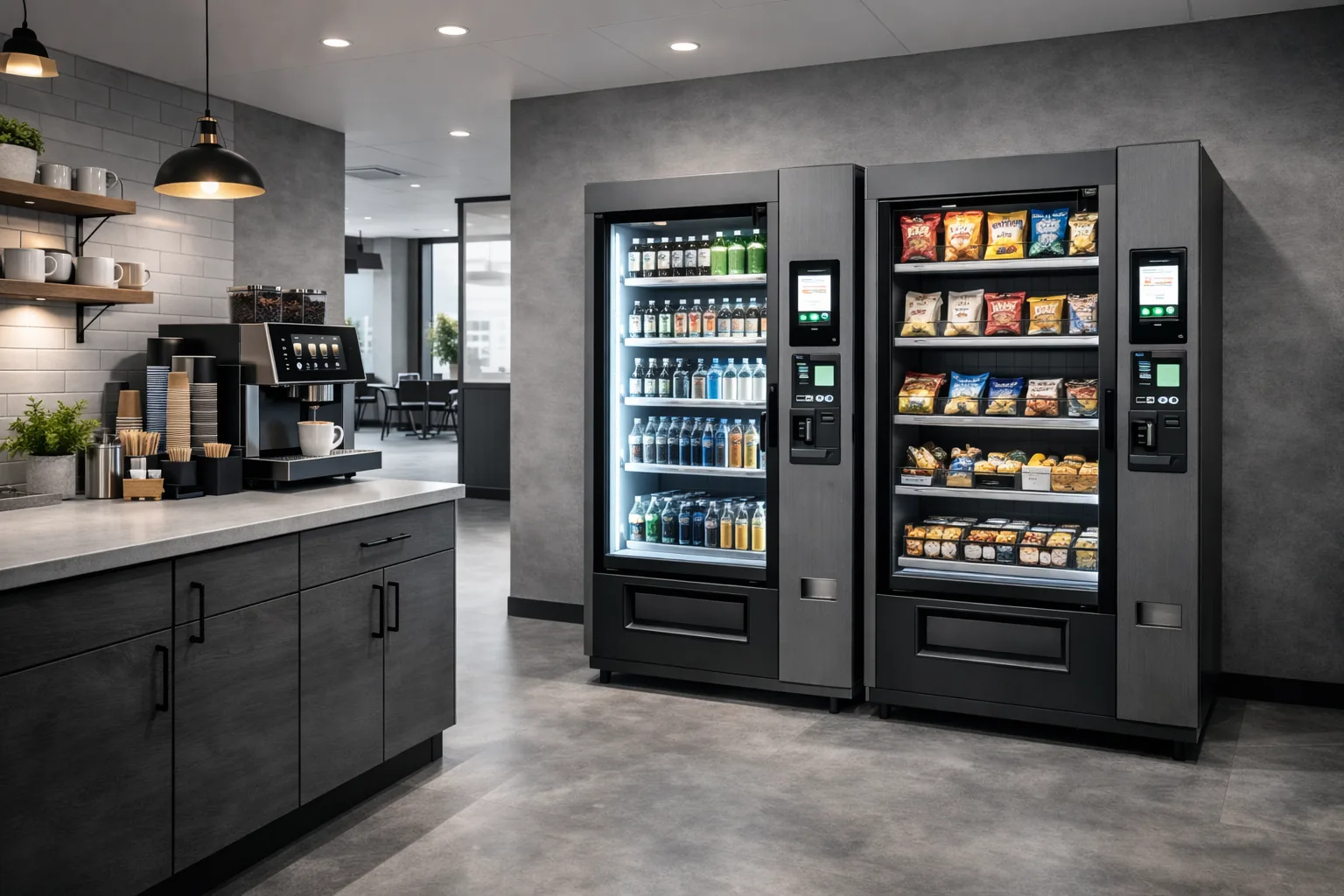
An operator supplies or coordinates the equipment, selects products, restocks inventory, handles payment systems, and responds to service issues.
Common machine types
Choose from snack-only, beverage-only, combination machines, refrigerated food machines, frozen vending, smart coolers, or specialty equipment.
Why businesses choose vending
It offers 24/7 access, a compact footprint, cashless convenience, controlled inventory, and less day-to-day work for the facility team.
Common vending machine types
| Option | Best for | Watch-outs |
|---|---|---|
| Snack (spiral) | Breakrooms with steady snack demand | Limited for fragile items; coils need correct sizing |
| Beverage (can/bottle) | High drink demand sites; gyms; warehouses | Needs temp stability; heavier restocks |
| Combo (snack + drink) | Smaller locations that need both | Lower capacity per category |
| Fresh/food (refrigerated) | Sites that want meals or healthier options | Higher spoilage risk; needs frequent service |
| Frozen | Meals/ice cream where allowed | Defrost/maintenance requirements vary |
| Option | Best for | Watch-outs |
|---|---|---|
| Smart cooler | Grab-and-go drinks/food with a “premium” feel | Requires cameras/sensors; placement + shrink controls matter |
| Locker vending | High-value items or controlled pickup | More complex UX; best with clear use cases |
| Specialty (PPE, tools) | Warehouses, manufacturing, clinics | SKU controls and replenishment discipline required |
| Non-retail (free vend) | Employer-paid programs | Needs policy controls; higher consumption patterns |
Smart coolers are often compared with micro markets. Coolers work when you want a smaller footprint and a curated set of items. Micro markets win on variety and throughput.
Decision guide: vending vs smart cooler vs micro market
Vending wins when…
- You need simple, familiar self-serve
- You have limited space or electrical options
- You want predictable capacity and low complexity
Smart cooler wins when…
- You want a premium, open-door experience
- Your mix includes beverages + fresh items
- You can support good placement and basic security
Micro market wins when…
- You want the most variety and browsing
- You have higher headcount or multi-shift demand
- You want a mini-store experience with kiosk checkout
What to specify (so you get the right proposal)
Site inputs
- Headcount by shift and break times
- Hours of access (24/7 vs business hours)
- Staff-only vs guest-facing location
- Preferred categories (classic, healthy, energy, meals)
Physical + ops inputs
- Placement area and approximate space
- Power availability and network/cellular signal
- Restock expectation (weekly, 2x weekly, etc.)
- Any restrictions (glass, allergens, branding)
Have questions? Email Greater Vending at info@greatervending.com for help connecting your business with the right operator.
How to compare vending proposals
The machine is only part of the decision. Compare the operating plan behind it so the service still works after launch.
Coverage
Confirm refill frequency, backup coverage, delivery access, and the response process for outages or payment issues.
Merchandising
Ask how sales data changes the product mix, how often slow items are replaced, and who handles special requests.
Account terms
Review equipment ownership, utilities, commissions if any, contract length, removal terms, and responsibilities in writing.
FAQ
Do I buy the vending machine?
Most locations do not. Operators typically place and service equipment when the location fit makes sense. In some scenarios you can purchase equipment or do a revenue-share model. We can help you compare approaches.
Is cashless required?
It is strongly recommended. Cashless increases sales, reduces service issues, and matches modern expectations.
How many machines do I need?
It depends on headcount, shifts, and break timing. A common issue is under-sizing capacity during peak breaks. We’ll use your shift and traffic pattern to recommend a right-sized setup.